By Michael Sheridan
Photos courtesy of CQI
The Coffee Quality Institute (CQI) is celebrating its 30th anniversary in 2026. Since 1996, the organization has trained and certified tens of thousands of coffee professionals, implemented project activities in more than 50 coffee-producing countries, and helped to create a common language of quality. The Q Grader Program—the sensory evaluation training and certification system for which CQI is best known—was central to that work. CQI licensed the Q Program to the Specialty Coffee Association last year, but that hardly means the organization’s work is done. On the contrary, CQI may be better positioned today than ever before to advance its mission to improve the quality of coffee and the lives of the people who produce it.
THE SECRET OF THE Q’S SUCCESS
The Q Grader Program was born of a critical insight early in CQI’s history, when the organization’s leaders realized that buyers evaluated quality in cupping labs on the basis of sensory evaluation of roasted coffee, but sellers did so mainly in mills and buying stations on the basis of physical evaluation of green coffee. The gap between the two approaches was a source of risk for the industry and a constraint on the growth of the market for quality coffee, so CQI designed the Q to narrow it.
CQI may no longer be administering the Q, but we can still apply its lessons to our work. The secret of the Q’s resounding success is that it creates value for buyers and sellers alike, removing a structural constraint for buyers while equipping sellers to participate as equals in the processes of quality evaluation and value discovery. That recipe is hardly exclusive to cupping. The same need for industrywide alignment—and the same potential for big wins for everyone—still exists across a broad range of supply stream functions that influence coffee quality from farm to port, not least in the places where coffee is processed.
PROCESSING
Post-harvest processing is having a moment.
For my first 20 years in coffee, the dominant strategy among producers who wanted to create different flavor profiles and bring a broader range of products to market was diversification in the field: They planted different varieties. Today, producers have applied the same approach at mills and washing stations, diversifying their post-harvest processes to create new experiences for consumers and new opportunities for themselves.
Processing details show up today most commonly on the labels of experimental single-origin releases, but processing isn’t just important for nanolots or novel flavor profiles. Buyers of specialty macrolots and commercial-grade coffee also demand clean and consistent deliveries that can only be achieved through the application of good post-harvest processing.
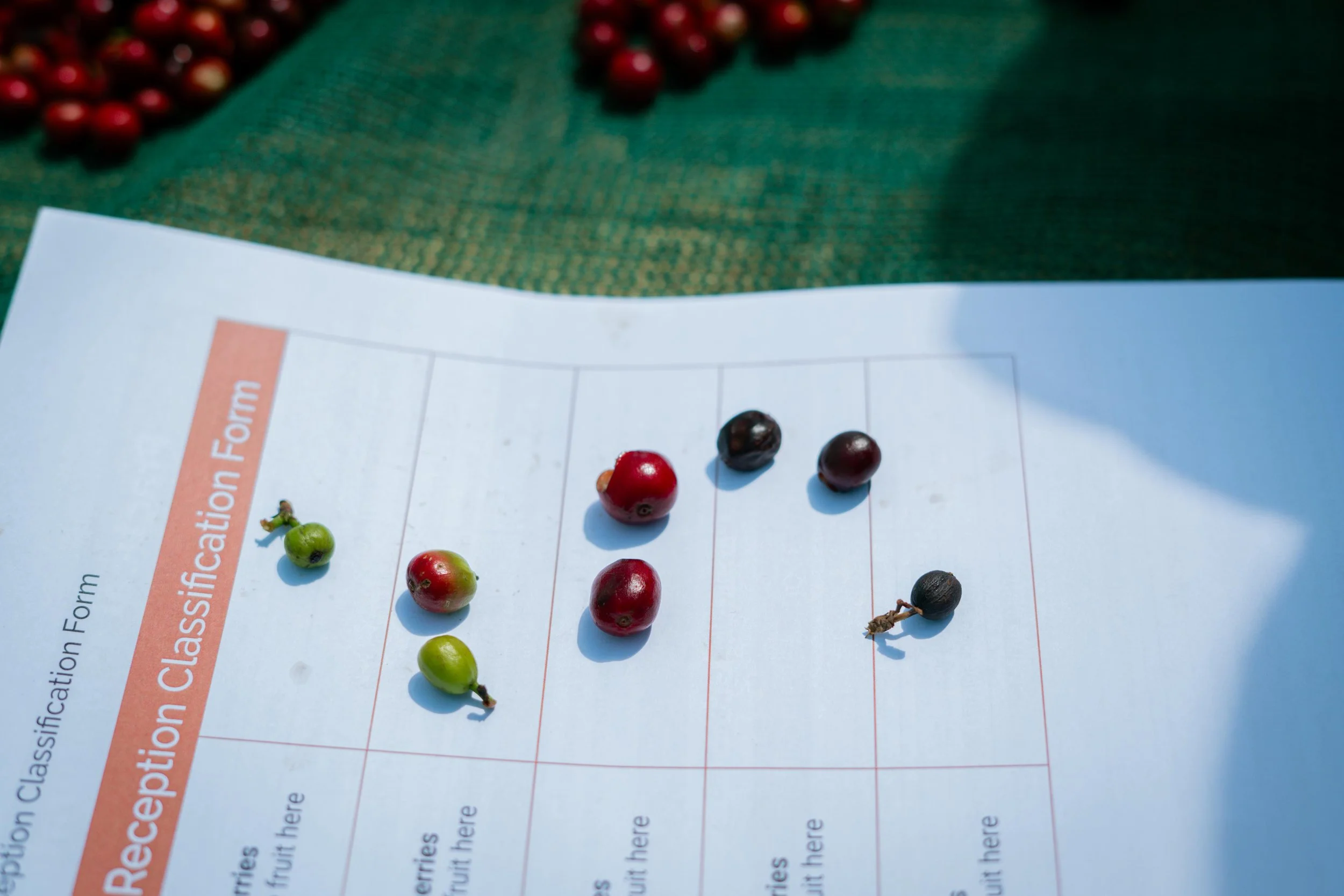
Classifying coffee cherries by ripeness.
The bad news is that post-harvest processing is laden with risk across all quality strata, especially in the new or experimental processes that have generated so much buzz in the industry lately. The good news is that the science-based curriculum of CQI’s Post-Harvest Processing (PHP) Program positions the organization to do the same thing at mills and washing stations that it did in cupping labs for more than 20 years—to help create a common approach that reduces risk, expands opportunity, and aligns communication for everyone in the industry.
For years, CQI has been working quietly to expand and improve its PHP Program offerings so it would be ready for this moment of rising industry interest in processing. Today, the growing PHP Program catalog includes introductory content at the 100 and 200 levels and more advanced material at the 300 and 400 levels.
The core course progression consists of a sequence of three offerings. Students who pass exams and complete coursework satisfactorily can earn certification as Post-Harvest Processing Generalists (level 200), Professionals (level 300), and Experts (level 400). The second of these, the Processing Professional certification, is to the PHP Program what the Q was to CQI’s Quality Evaluation Program—a credential designed to certify the skills of people in leadership roles working every day to manage quality.
The people who manage the mills and washing stations where cherry is aggregated are responsible for the highest-leverage quality control points in the supply stream. Companies that make workforce development investments to train, test, and certify them will generate returns in the form of risk reduction, quality improvement, and employee satisfaction and retention. In 2026, CQI’s certification courses will feature all new-and-improved content. As of this writing, we are concluding a comprehensive review of the entire sequence, which has taken more than a year, and we are already working with industry leaders to build programs to train and certify the people who manage their mills. Growing enrollment in these certification courses—especially the flagship Processing Professional course—is one of the three leading priorities for CQI’s PHP Program in 2026.
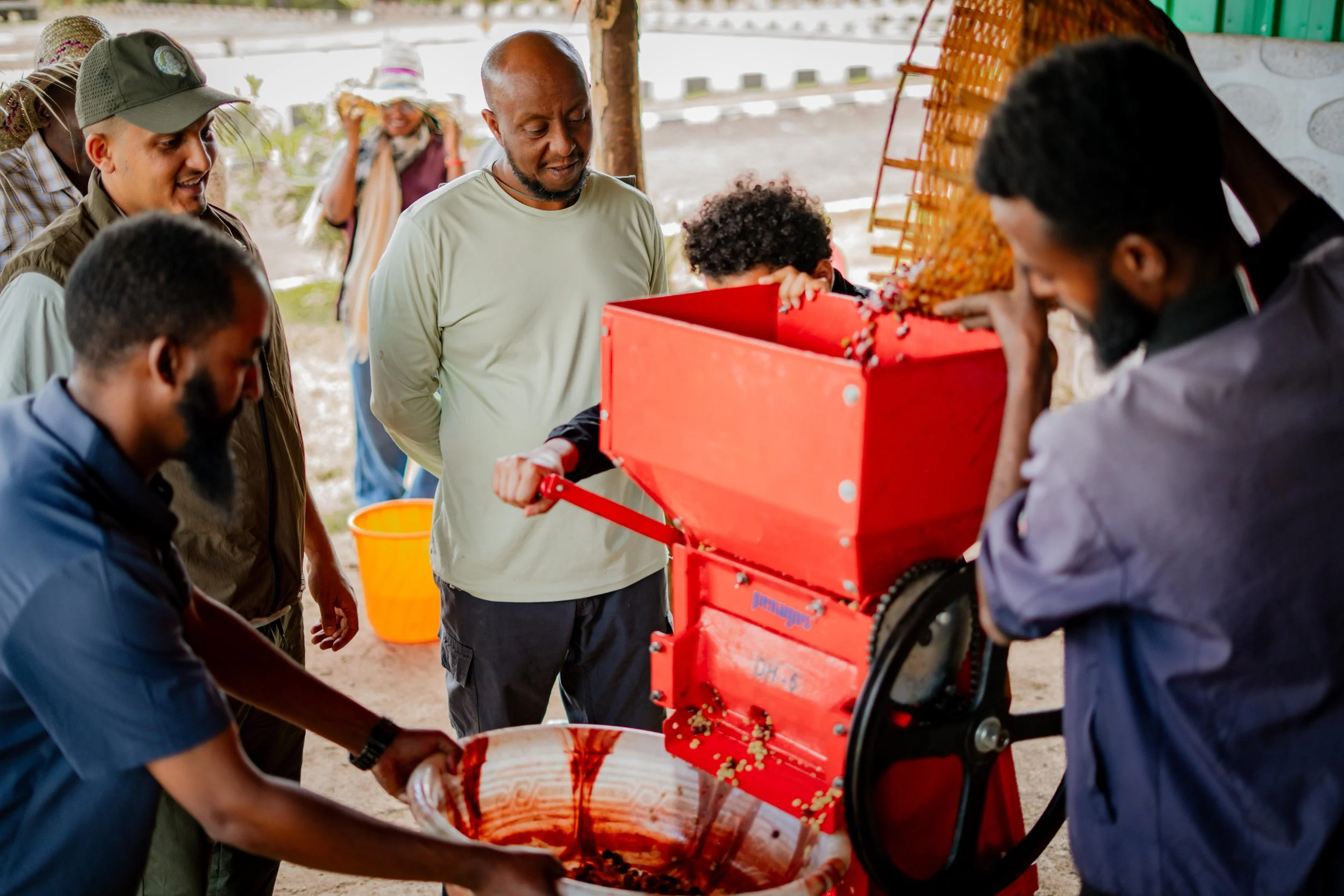
A demonstration of the coffee pulping process.
But these certification courses aren’t right for everyone. The millions of smallholder producers who process coffee on their farms around the world may not need a professional-level credential but may want training to improve post-harvest practices. Most of the 100- and 200-level classes in the PHP catalog are designed with them in mind. They take the same rigorous approach as the certification courses, but they are shorter, less expensive, less theoretical, and more hands-on. These practical offerings are educational building blocks that producers can stack in ways that are relevant to their needs to improve post-harvest practices at scale. We also see educational opportunities among roasters, retailers, and consumers who have been unable to keep up with the dizzying pace of innovation in post-harvest processing. Increasing the number of classes at both ends of the supply stream is the second priority for the PHP Program in 2026.
The third priority is growing our educator network. The people delivering CQI content today are extraordinary. They undergo rigorous training and testing, and many of them are distinguished coffee leaders in their own right, occupying prominent roles at farms, mills, training centers, cupping labs, trading firms, and roasteries around the world. The only problem is that there aren’t enough of them in the places where coffee is grown. CQI will invest in 2026 in pursuit of its vision of localized education in which the organization’s content is delivered in local languages by homegrown coffee talent.
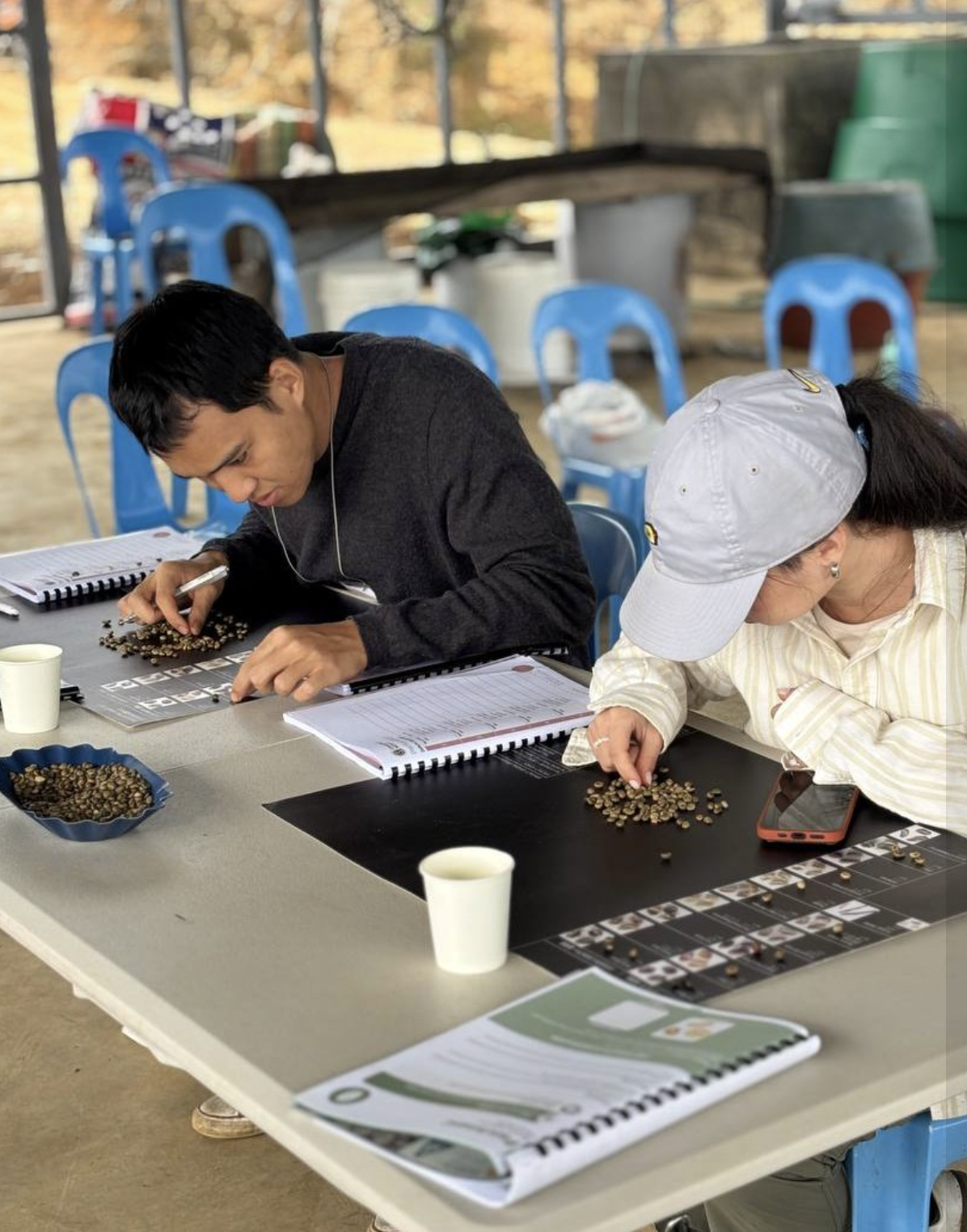
Students practice identifying green coffee defects.
PROBLEM SOLVING
It is a source of pride for CQI and a testament to the Q Grader Program that it became the industry standard for cupper training, a credential widely recognized—and often required—by employers in the coffee trade. In recent years, observers could be forgiven if they considered certification to be the primary purpose of the program. While CQI celebrated every Q Grader certification, the organization kept its focus on the broader objective, which was helping the industry solve a structural problem by creating a common language of coffee quality. We spent decades working with partners at every point in the supply stream to make it happen, and we are ready to do it again, starting with processing.
Much of our energy in 2026 will be focused on post-harvest processing training, and we plan to enlist CQI PHP Program educators in that work. But we also see vast unmet need beyond the mill and expect to help partners begin to identify and address a broader range of challenges to quality, including farming, sampling, contracts, financial management, operations, and other mission-critical functions. For these new programming areas, we will need to look further afield for support. To support that work, we have reactivated the CQI Coffee Corps in 2026.
Coffee Corps is a specialized peer training program that identifies specific needs in coffee-producing countries and mobilizes subject matter experts to address them. CQI students, educators, board alumni, donors, and friends are working throughout the global coffee trade, from farming to retail and everything in between. The revived Coffee Corps program will work to match volunteers from this global CQI community with opportunities to advance its mission. Calls for Coffee Corps volunteers will be listed on the CQI website as they arise.
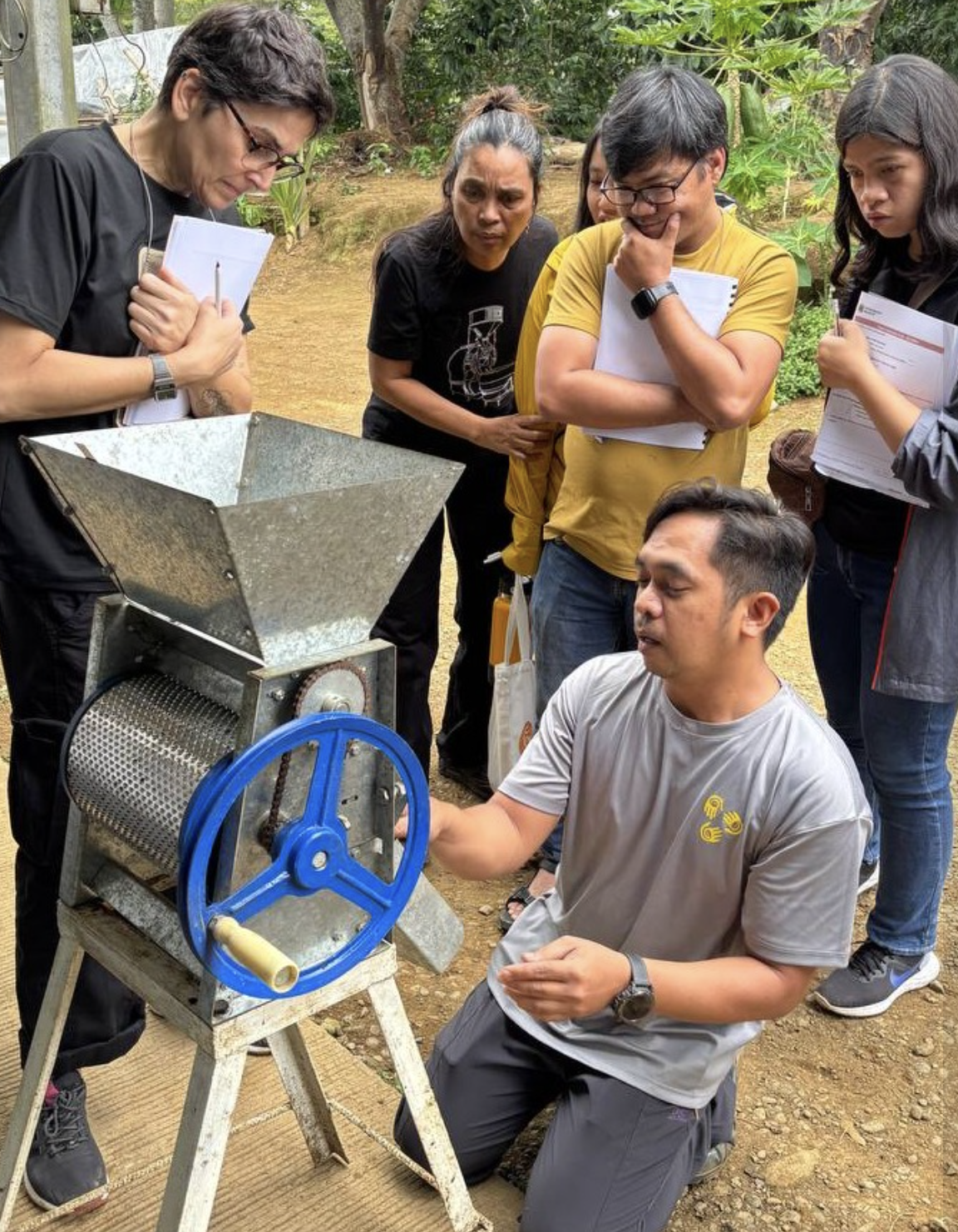
A demonstration of how to calibrate a coffee pulping machine.
PRO JECTS AND PARTNERSHIPS
The U.S. Agency for International Development (USAID) was the world’s largest source of funding for coffee communities and the largest donor in CQI history before it was eliminated in 2025. But even before it disappeared, USAID disinvested: Its funding for projects in coffee communities had been declining steadily for years.
In 2023, CQI created its Global Coffee Fund as a way to ensure that the organization would always have boots on the ground in coffee communities, regardless of whether or not it was actively managing donor-funded projects. Today, it is the biggest source of funding for CQI’s overseas work.
For each of the past two years, CQI has mobilized on average just over $100,000 per year in cash and in-kind contributions to expand access to coffee education and create opportunities for the producers at the heart of its mission. This work has been important, but hardly sufficient. Against the backdrop of USAID’s closure, it is time for all of us to step up. As donors walk away from coffee communities, CQI is proud to stand firmly with those communities, and we are inviting the industry to join us.
We have overhauled the Global Coffee Fund for 2026 and introduced two important innovations. First, we are dramatically expanding investment, and second, we are introducing a new program designed to catalyze co-investment. Our goal for 2026 is to mobilize $500,000 in new commitments to benefit coffee communities.
We will continue to make Project Awards in 2026 like the ones we have been making since 2023, except we are committing more than ever before. Total awards in 2026 will reach $100,000 in cash, more than double our investment in 2025. In-kind contributions will drive that number substantially higher.
Perhaps more importantly, we have created a Matching Grant Program that will deliver a dollar-for-dollar cash match on the first $200,000 in external cash investment in CQI projects, mobilizing $400,000 in new cash commitments for coffee communities, again not including any additional in-kind contributions.
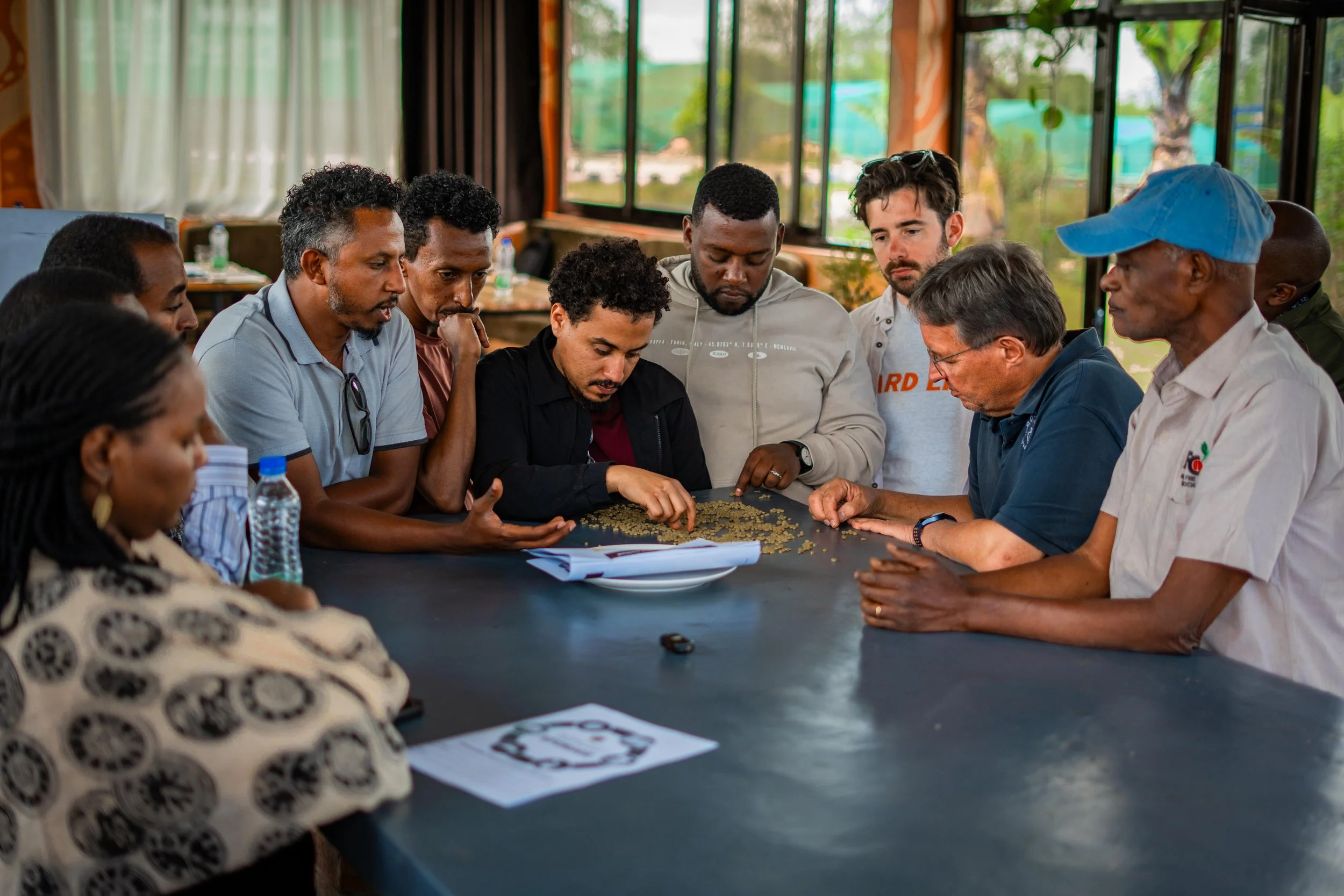
Students discuss green coffee defects.
This investment will support four categories of activity: scholarships for coffee professionals seeking educational opportunities, fellowships for educators who want to earn the credentials they need to train coffee professionals, group training sessions, and customized projects co-designed by CQI and program investors to address challenges to quality. The short-term goal of these projects is to drive impact in coffee communities and pilot new approaches to collaboration to advance CQI’s mission. The longer-range objective is to build lasting partnerships with organizations that share CQI’s commitment to coffee quality and to the producers on whom our industry depends.
PRE-COMPETITIVE COLLABORATION
CQI is an industry-based platform for pre-competitive collaboration and stream-wide innovation in the name of quality, the only one focused on management in the places where coffee is grown. Yes, World Coffee Research (WCR) is a vital industry organization also working in coffee’s origins, but its work on breeding and genetics is focused on what coffee communities produce. CQI’s work to improve management for quality is focused on the how, making CQI and WCR perfect complements to one another, both committed to the success of the producer on whom our industry depends, and both essential to the future of coffee.
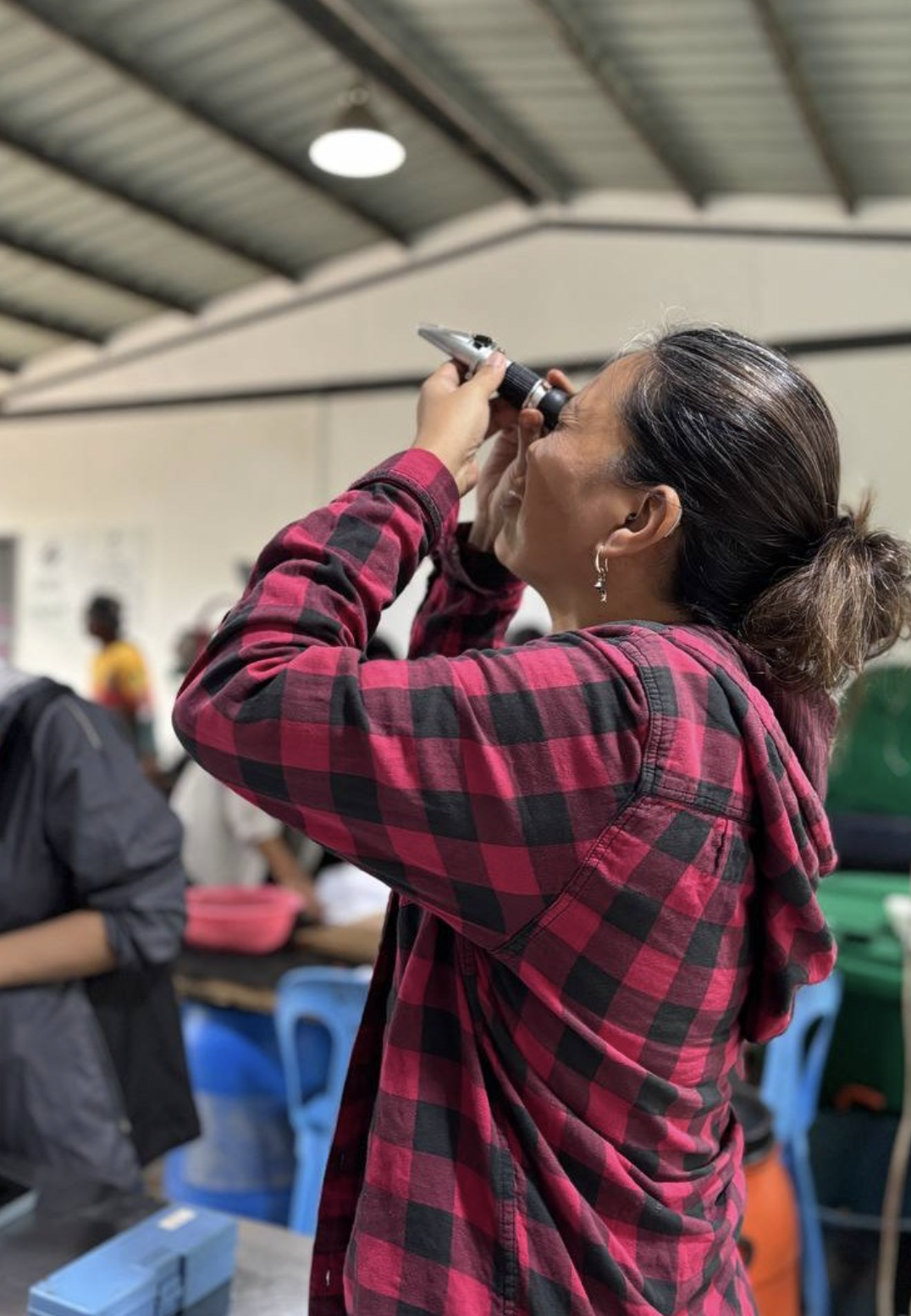
A student uses a refractometer to measure Brix—the sugar concentration in coffee cherry juice.
CQI occupies a unique place in the coffee ecosystem. At a time when donors around the world are disinvesting in coffee communities, there are fewer projects serving producers than at any time in a generation, making our small but mighty organization more important than ever. Over the past 30 years, CQI has partnered with buyers and sellers in cupping labs in dozens of countries around the world to reduce risk and expand opportunity by fostering a common language of coffee quality. Over the next 30 years, we can take the same approach in other spaces—farms, mills, farmer enterprises—to strengthen the systems on which coffee quality depends.
We look forward to working with quality-driven collaborators everywhere to reduce risk, seize the opportunities created by growing demand for quality coffee, and ensure everyone in the coffee industry can thrive.
* * *
MICHAEL SHERIDAN is the CEO of Coffee Quality Institute. Prior to joining CQI, he served as the director of sourcing and shared value at Intelligentsia Coffee (2016–2023) and in leadership roles for various coffee initiatives at Catholic Relief Services (2004–2016). He has written and spoken widely on sustainability in coffee.
Advertisement