By Kat Melheim
Coffee sourcing is a core element of running a roasting business, yet it is often overlooked in conversations around roasting. Your green buying program determines what ends up in the cup, how much control you have over your menu and, ultimately, how resilient your business is year over year.
In the article “Buy Less to Do More: Coffee Sourcing Through Partnership and Planning,” published in Roast’s May/June 2021 issue, Ever Meister presented a compelling framework: Roasters should consider buying more coffee from fewer producers to build long-term partnerships that create stability on both sides of the supply chain. It’s a philosophy rooted in commitment, planning, and an aim toward mutual growth.
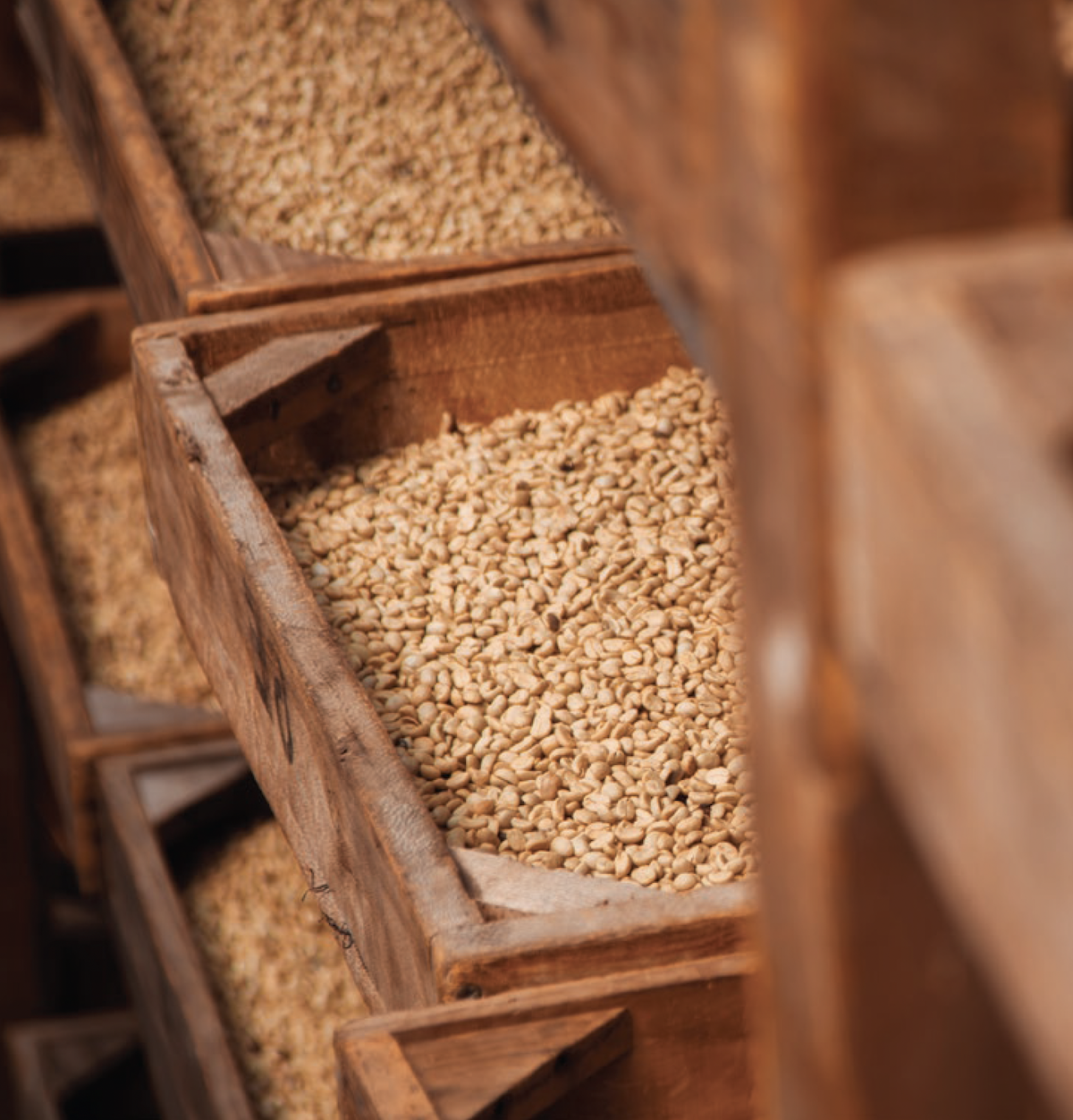
Photo by Juan José Sánchez Macías
But what does that look like in practice?
To revisit and expand on Meister’s work, I spoke with two experienced coffee professionals working at different places in the green coffee trade: Rachel Apple, who handles East Coast sales for Algrano; and Dakota Graff, director of coffee at Arkansas-based Onyx Coffee Lab. Their perspectives reveal alignment with Meister’s core ideas and the realities of executing a sourcing program.
WHY SOURCING MATTERS
Green coffee sourcing is not just about finding tasty coffee. It’s about constructing the foundation your entire roasting program is built on. Every decision you make as a buyer shapes what is possible in the roastery: flavor profiles, menu structure, pricing, consistency, and how your customers experience your company. A well-built sourcing program creates stability and clarity. A reactive approach creates constant friction as you’re left scrambling to replace coffees, fill gaps in offerings, sit on coffee as it ages, mitigate inconsistent quality, and adjust to unpredictable costs.
This is the core of Meister’s argument: Sourcing works best when it is intentional, structured, and built around long-term thinking while keeping short-term realities in mind. A strong buying program should be oriented toward creating predictability in an otherwise volatile supply chain as well as aligning with your greater company goals and values. A clear set of values makes decision-making easier.
This is central to Graff’s buying practices at Onyx. “I think about risk and how I want to fulfill contracts, and also how I want to do it in the best way that ties back to my inherent sourcing values and the inherent values of Onyx,” he says. “We value excellence, transparency, and traceability. So basically, anything I buy is going to be funneled through those values, as opposed to just filling a contract and just checking a box. And that helps me make decisions much clearer and cleaner than it would otherwise.”
Apple emphasizes the importance of clarifying what you are trying to build. “You need to define what it is you would like to sell and then figure out: Is that country specific? Is that profile specific? Is it blend specific? Is it to only be in milk drinks? Then, what are the ways in which you will go source? Is it going to be by price? Is it going to be by social project, like supporting young farmers or [female producers] or fair trade? Is it going to be on cup profile, defect count, cupping score?”
Clarity allows buyers to shift from simply choosing from what’s available to actively shaping their menus. And perhaps most importantly, it allows roasters to move from short-term problem solving to long-term program building.
SPOT VS. FORWARD BUYING
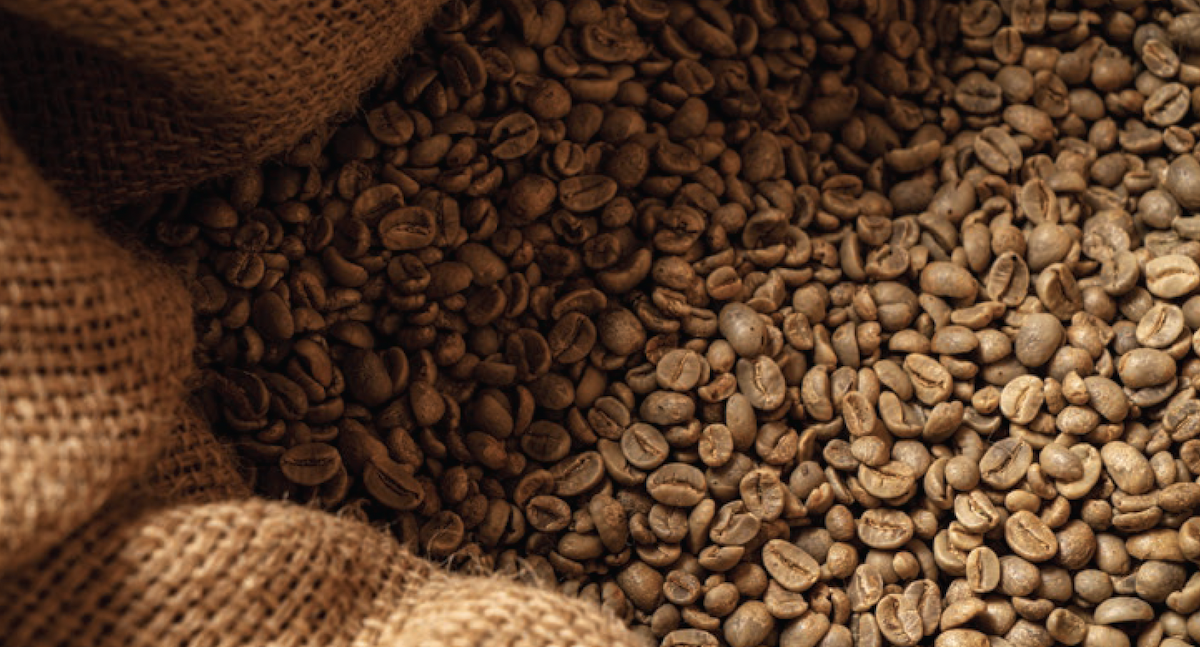
There are two ways to buy green coffee: spot and forward. With spot buying, the coffee is already in a destination country and is held/owned by an importer or trader. You look at a menu of what that trader has on hand and available for immediate release. Forward buying, in contrast, is committing to coffee while it is still in the origin country, often before or during the harvest. It is essentially a pre-order for coffee.
Within forward buying, we often talk about relationship buying, direct trade, or direct sourcing. This model includes establishing year-over-year relationships with producers or cooperatives. You don’t need to have a direct relationship with a producer to do forward buying, but there are plenty of benefits that come from working with the same people over time, such as building trust, learning each other’s preferences and business needs, and growing together.
Many roasters do some combination of spot and forward buying, depending on their needs and goals. To simplify, spot buying can offer flexibility while forward buying offers more stability. But in today’s volatile market, that distinction is becoming more complex.
“I think there are lots of circumstances in which you would consider both,” says Apple, noting that having too much coffee in your possession is a financial risk for small roasters. “If you’re brand new,” she advises, “buying spot and only meeting your current demand is safe. It’s a low-risk appetite decision. But it also is higher risk because you’re burning more money.” While spot buying can fill short-term and low-volume needs, she explains, “basically you’re always paying more for lower-quality coffee at spot. It’s been stored for longer. You’re paying the financing. You’re paying the sticker price. ... Every time you run that equation, you’re going to pay the premium for having the convenience.”
Forward buying has become the norm for Graff at Onyx, given the company’s growing coffee needs and the changing landscape of spot availability over the past few years. “I would say 99 percent of what we buy is forward,” he says. “... Spot buying has become way more complicated than it used to be in terms of price and outsized risk for importers because coffee prices have become so volatile, and that’s prompted me to not lean on spot basically at all. So I buy a very, very small amount of spot and then the rest of it is all what we would consider relationship coffee, which is our direct trade model.”
This is a key evolution since Meister’s article was published in 2021. Spot buying no longer just means convenience. It has increasingly become shaped by upstream risk, pricing volatility, and importer behavior, risks that impact the availability, range, and price point of spot coffees.
The takeaway isn’t that you should avoid spot buying entirely. It’s that relying on it heavily may limit your ability to control cost, quality, and coffee availability, especially for volume lots, main blend components, and coffees that show up on your menu all year long. Instead, a change of approach may be needed for sustained growth and stability.

BUILDING AND IMPLEMENTING A SOURCING PROGRAM
Meister’s article encouraged roasters to define their values, understand their customers, evaluate volume and pricing constraints, and assess the risks and benefits of long-term partnerships. Gaining this clarity forms the foundation of a sourcing strategy that can evolve over time without exposing the business to unnecessary risk.
The next step is communication, says Apple, explaining that once you identify your values and goals, you must then communicate them clearly to the seller, including price point, volume, cup score or cup qualities, and timeline. “If you can do that,” she says, “it’ll be a kindness and an efficient use of everyone’s time.”
This is where Meister’s framework becomes actionable: Buying more coffee from fewer partners only works if you know what you’re trying to build, and if your partners are aligned.
PLANNING, FORECASTING, AND RISK
Forward buying requires forecasting—or estimating future coffee needs. Forecasting includes making educated guesses about how much green coffee you will go through over time, how much your company will grow (or shrink), which coffees will be popular with your customers versus which will be harder to sell, what coffees will be available in what quantities and at what price points, and more.
“I mostly lean on historics,” says Graff, “and I do it line by line, so every single blend has its own forecasting tab where I break it down to every single component that went into it and what worked and what didn’t. I spend so much of my time doing forecasting.”
Even with the best spreadsheets and most data-informed calculations, forecasting is never perfect. Graff continues, “But oftentimes, once I get to the actual point of buying, I use my forecasting more as a guideline.” His approach to risk errs on keeping lean, meaning he doesn’t buy more than he thinks the company will use. “I would rather be a bit conservative and have some spontaneous opportunities in the future rather than be stuck with a bunch of past crop because I wasn’t responsibly looking at numbers,” he notes. “So our position at any moment is usually short.”
Sometimes, though, market conditions get the best of even the most experienced buyers, and the best laid plans can go awry. Even after saying he typically tries to stay lean, for example, Graff adds, “However, I am trading long this year because prices were very high at the beginning of the year and then we got a dip. So I actually positioned us pretty long, which is really atypical for me.”
The goal here is finding a balance that allows you to have enough coffee to meet demand, but not so much that your coffee shows age or your cash flow is negatively impacted.
RELATIONSHIPS, COMMUNICATION, AND THE REALITY OF PARTNERSHIP
Meister’s framework centers relationships. The idea is simple: Buying more coffee from fewer producers creates stability, trust, and long-term mutual benefit. In practice, relationships are often more complicated than we like to believe.
Graff reflects on the benefits of his relationship-forward model, saying, “It’s so multifaceted because I think that: One, you can grow with people, which is super fun and important. And two, you can have a commitment [that reaches] past a year-to-year buying program.” As the specialty coffee industry continues to expand, he says, most coffee buyers have the opportunity to add more coffee to contracts every year. “And growing with partners is super rewarding,” he adds. “To see people we work with build new dry mills and new facilities and knowing that you had either a small or large stake in that is always really rewarding.”
One critical aspect of any healthy relationship is good communication. Apple’s top piece of advice for roasters who want to build a strong sourcing program is to work on their communication. “Be a good communicator,” she says. “Approach people as business partners, not someone that you’re demanding something from. There’s a history and a lot of room for improvement where buyers can approach producers with equity in practice, not just in words.”
“The biggest responsibility that buyers and roasters have is communication with partners,” agrees Graff. “I think it’s one of the things that’s helped Onyx grow. I try to be as professional as I can when it comes to sample feedback, expectations, and also purchasing volumes and pricing negotiations. So all of those things, I try to come to the table with a very professional and organized set of expectations, which ultimately helps everyone.”
But good communication isn’t always positive. Sometimes you need to tell a producer that their profiles don’t fit in your menu, that their price is too high, or that you otherwise won’t be purchasing their coffee.
“The biggest downside to relationship buying is the tough conversations and the unmet expectations,” Graff continues. “I try to be as clear with my communication in terms of the cup and how it relates to my buying practices and how the expectations align or don’t. That can be an extremely difficult conversation, but it’s something that you get better at as you do it more.”
Honesty is key, agrees Apple. “I see roasters not treating producers as equals,” she says. “They feel like they need to protect them from hard feedback.” This only serves to uphold an unequal power structure, she notes, preventing producers from learning and adjusting their offerings, or looking elsewhere for customers. However well-intentioned this might be, withholding honest feedback undercuts equity in the business relationship. “Honesty is kindness,” Apple says, as long as you’re not rude about it.
THE CRITICAL ROLE OF FEEDBACK
Relationships require more than commitment. They require clarity, accountability, and ongoing communication. And they require feedback.
A quick email or WhatsApp message after cupping samples can have real impact for suppliers. It gives producers insight into how their coffees are being received, whether you plan to buy or not. And yet, this is where many sourcing programs fall short.
“Requesting samples and never giving feedback is pretty poor practice,” says Apple. “If you solicit samples explicitly, then you’re honor bound to give that feedback.”
This isn’t just a courtesy. Without feedback, producers are left guessing what the market wants. They don’t know why a coffee was rejected, what worked, or how to adjust. That guesswork slows progress and business on both sides.
Photo by Juan José Sánchez Macías
“What roasters completely misunderstand about creating a sourcing program is that it’s not going to get better without their feedback,” says Graff. “I think they just don’t understand that they can’t get what they want without saying what they want. It’s important to communicate exactly what you want—and then also continually provide a cycle of feedback.”
Feedback doesn’t need to be complicated. It just needs to be specific. Share what you tasted. Share how you would use the coffee. Share whether the price aligns. If you’re already taking notes, send them upstream. That small step can help a producer refine their approach or find a better market fit.
At Onyx, this is built into the process. “We are very committed to cupping every sample that we get,” says Graff, “and that provides a level of feedback that we can at least continue a conversation as opposed to close the door.”
Feedback isn’t only important when you pass on a coffee. It’s just as important when you say yes. “When you buy a coffee, tell [the producer] why. Not just, ‘I’ll take 50 bags of this. It fits the profile.’ Then they can help meet that need again year over year,” says Apple. That feedback will foster mutual understanding and a long-term relationship that can grow.
This is where sourcing shifts from transactional to collaborative. Feedback creates alignment. It allows producers to make better decisions, and it allows roasters to get closer to what they’re actually looking for.
Forward buying—or more specifically, relationship buying—isn’t inherently superior to spot. It’s simply a framework that, when executed well, creates the conditions for better coffee, stronger partnerships, and more resilient businesses across the supply chain.
RETHINKING SOURCING
Spot buying offers flexibility, but often at a cost in terms of finances and availability. Forward buying offers stability but requires planning and forecasting. Relationship buying/direct trade offers depth but requires communication and accountability.
Meister’s recommendation—to buy more coffee from fewer producers—is even more compelling today than when it was originally published, but it’s not a shortcut. It requires clarity, consistency, and a willingness to engage in the less-visible parts of sourcing: spreadsheets, forecasting, feedback, and difficult conversations.
Sourcing isn’t just about finding great coffee. It’s about building systems and relationships that allow you to sell consistently great coffee over time. For some roasters, that may mean leaning heavily on forward contracts and long-term relationships. For others, it may involve a hybrid approach that incorporates strategic spot buying.
There is no universal playbook, but there are clear patterns among experienced buyers who are looking at the long-term success of our industry. In a nutshell, these include:
defining what you want—your goals and your company’s values;
communicating those goals and values clearly, both internally and with partners;
planning and forecasting as accurately as possible, and adapting when reality shifts; and
closing the loop with clear, honest, and consistent feedback.
“Success is being in alignment with yourself and your outward stated goals,” says Apple. “Success is defining something and then achieving it. Success is being in good partnership and being a good steward of this industry.”
Graff describes it from a practical and personal perspective. “Buying is a relationship, whether or not you know it,” he says. “You either have a relationship with an importer and you’re just buying spot, or you can facilitate relationships deeper than that and facilitate something that is broader and that you could use to your advantage in the business and in your life.”
In the end, sourcing isn’t about discovering the perfect coffee one time. It’s about cultivating the conditions to create the best coffee possible year after year.
* * *
KAT MELHEIM is a coffee roaster, writer, educator, and creator. Known as @RoasterKat on Instagram and YouTube, she shares her passion for coffee through engaging content that covers everything from origin adventures and behind-the-scenes roastery insights to practical tips and tools for roasters. Melheim is the founder of Coffee People Zine (est. 2018), an art magazine that celebrates the creativity of the coffee community. She brings her expertise to Algrano as roaster ambassador.
Advertisement